
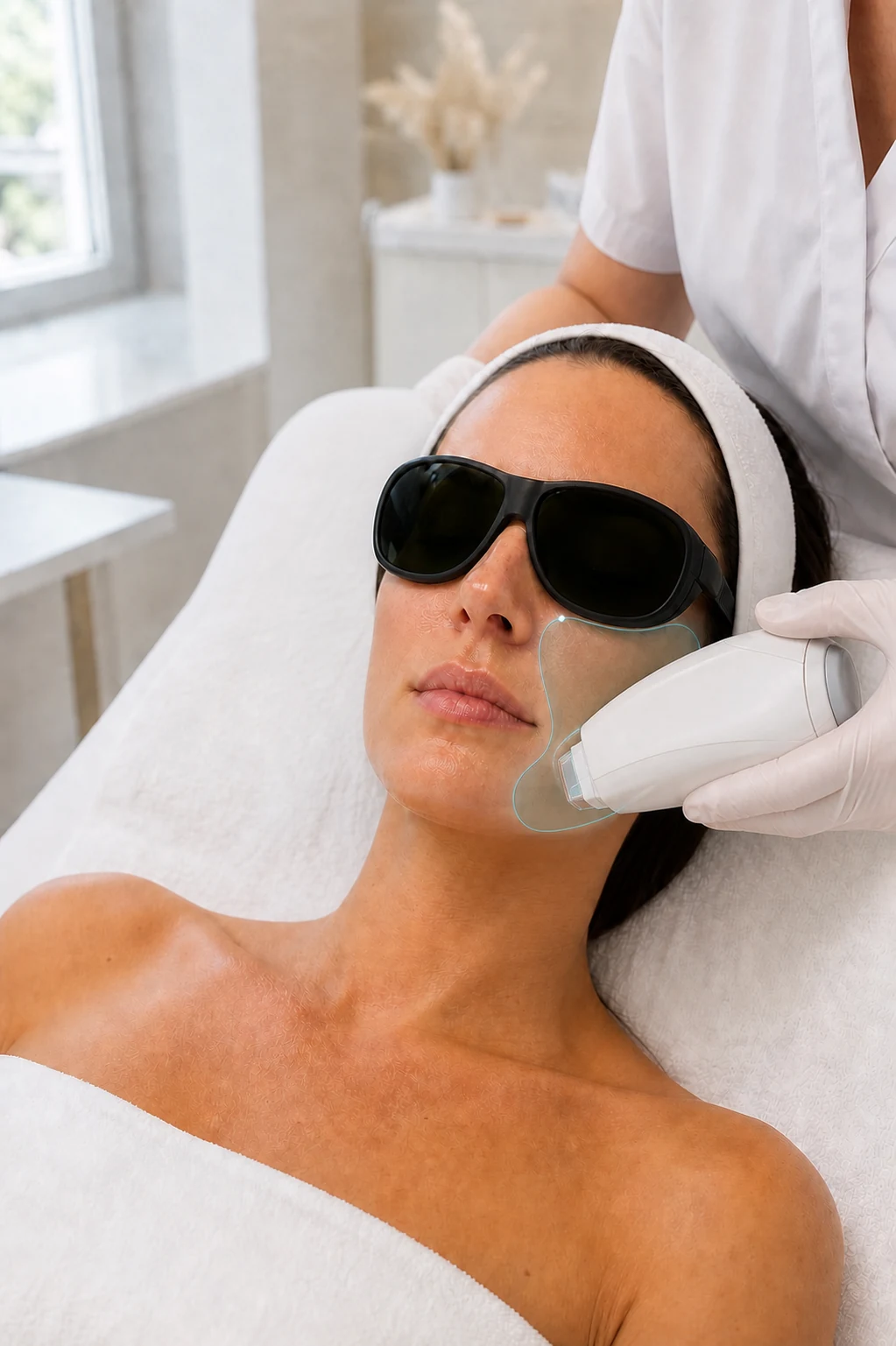
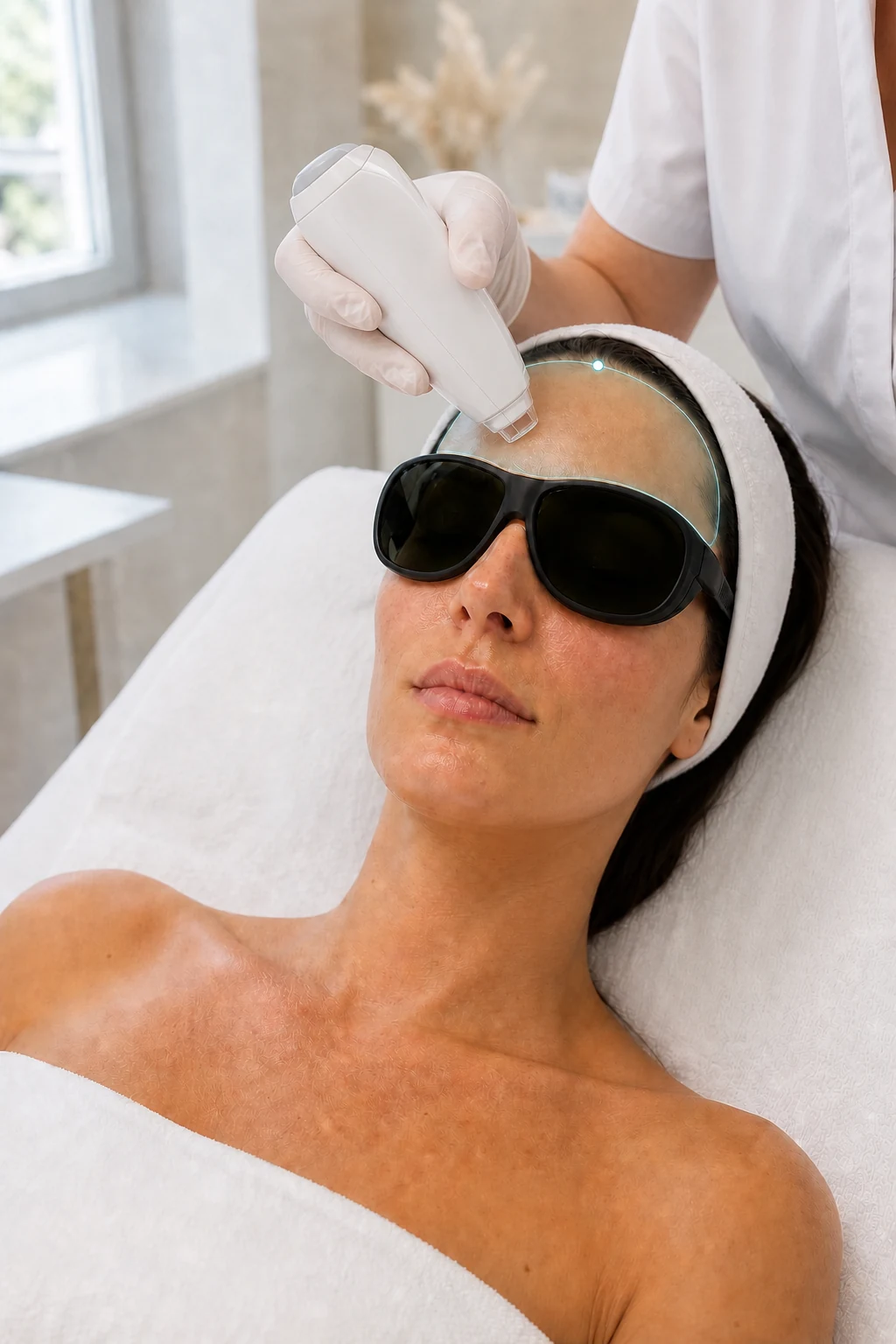
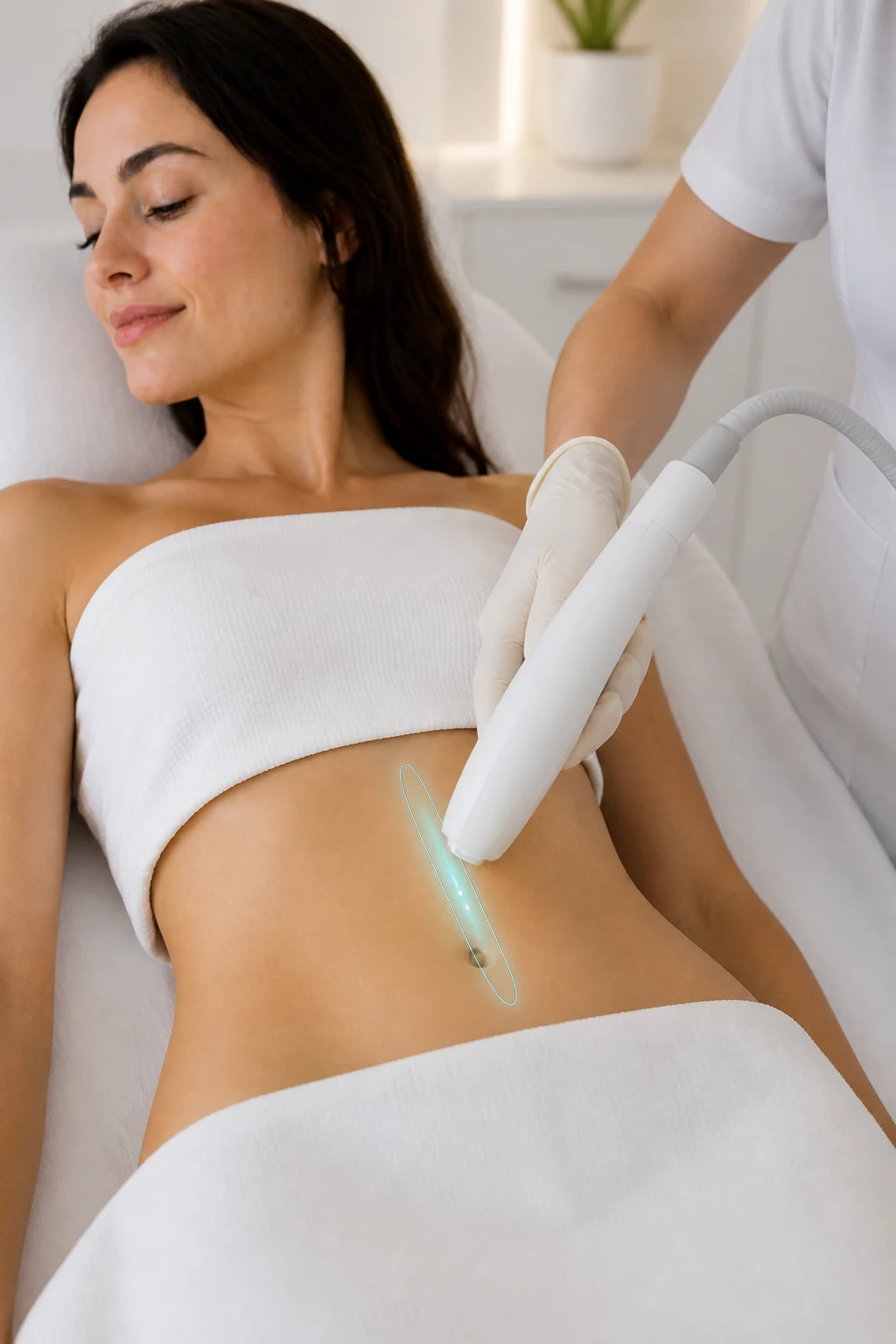
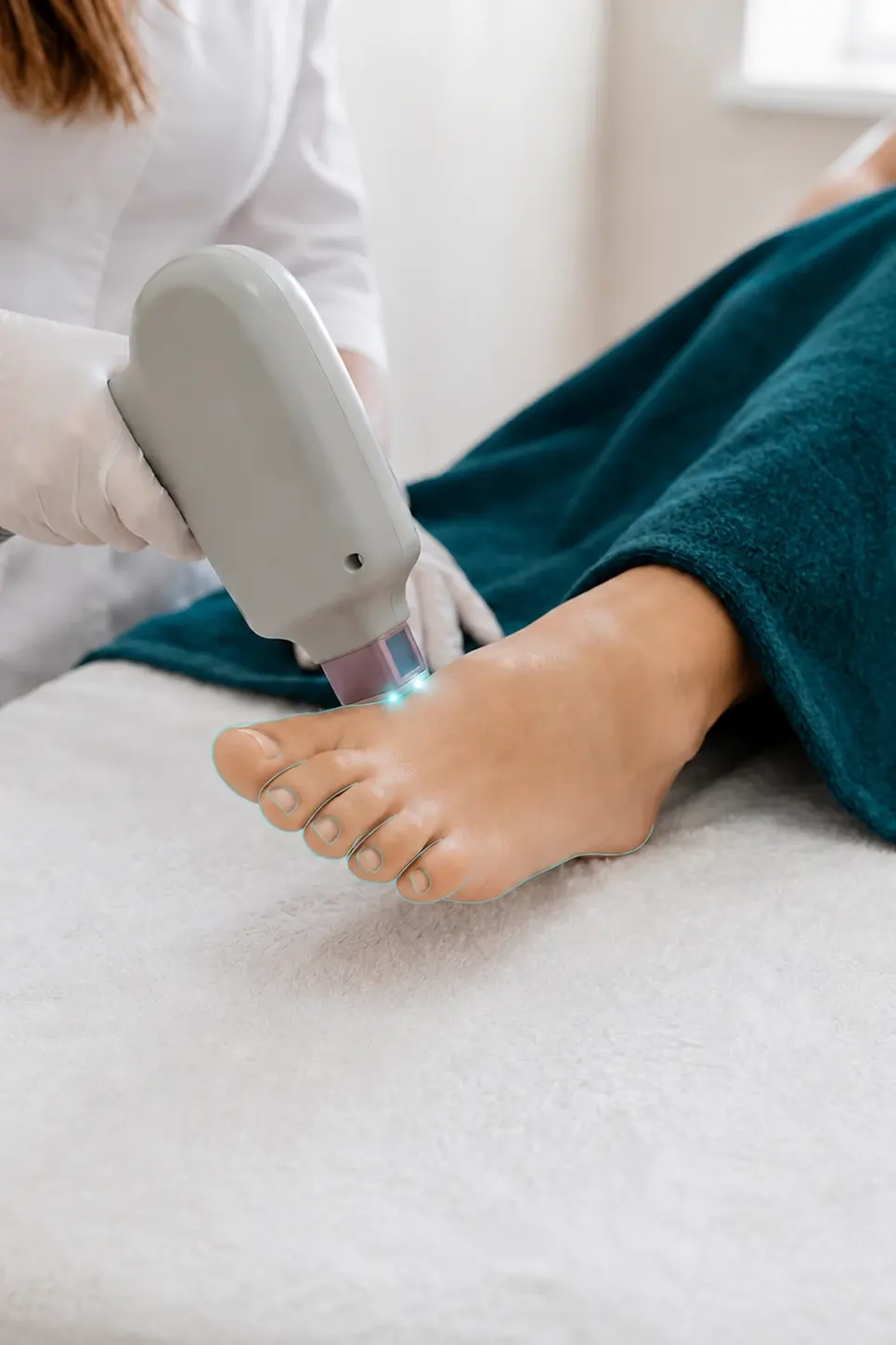
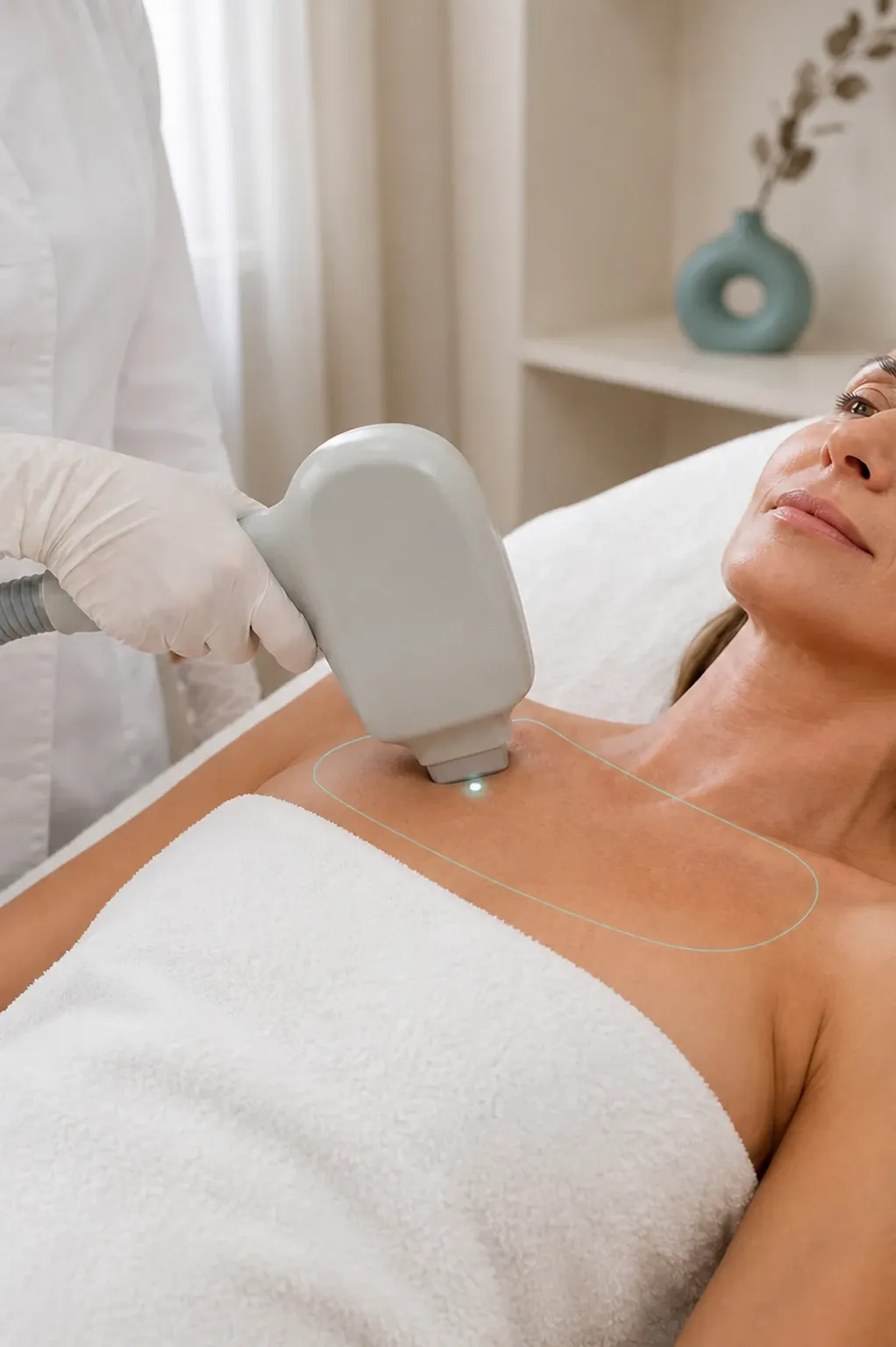

On average 6–10 sessions* at 4–8 week intervals: hair is only removed in its active growth phase, which is why the course is spread out over time. The exact number depends on the area, the density and the colour of the hair — the specialist will tell you after the examination.* Average course — the exact number of sessions is determined individually.
Upper arms — laser hair removal in Vilnius
Diode laser: hair goes over a course — sparser and finer with every session.
- Visit ≈ 40 min
- A latest-generation diode laser
- Cooling tip for greater comfort
- Settings are matched to phototype and hair colour
About the treatment
About the treatment
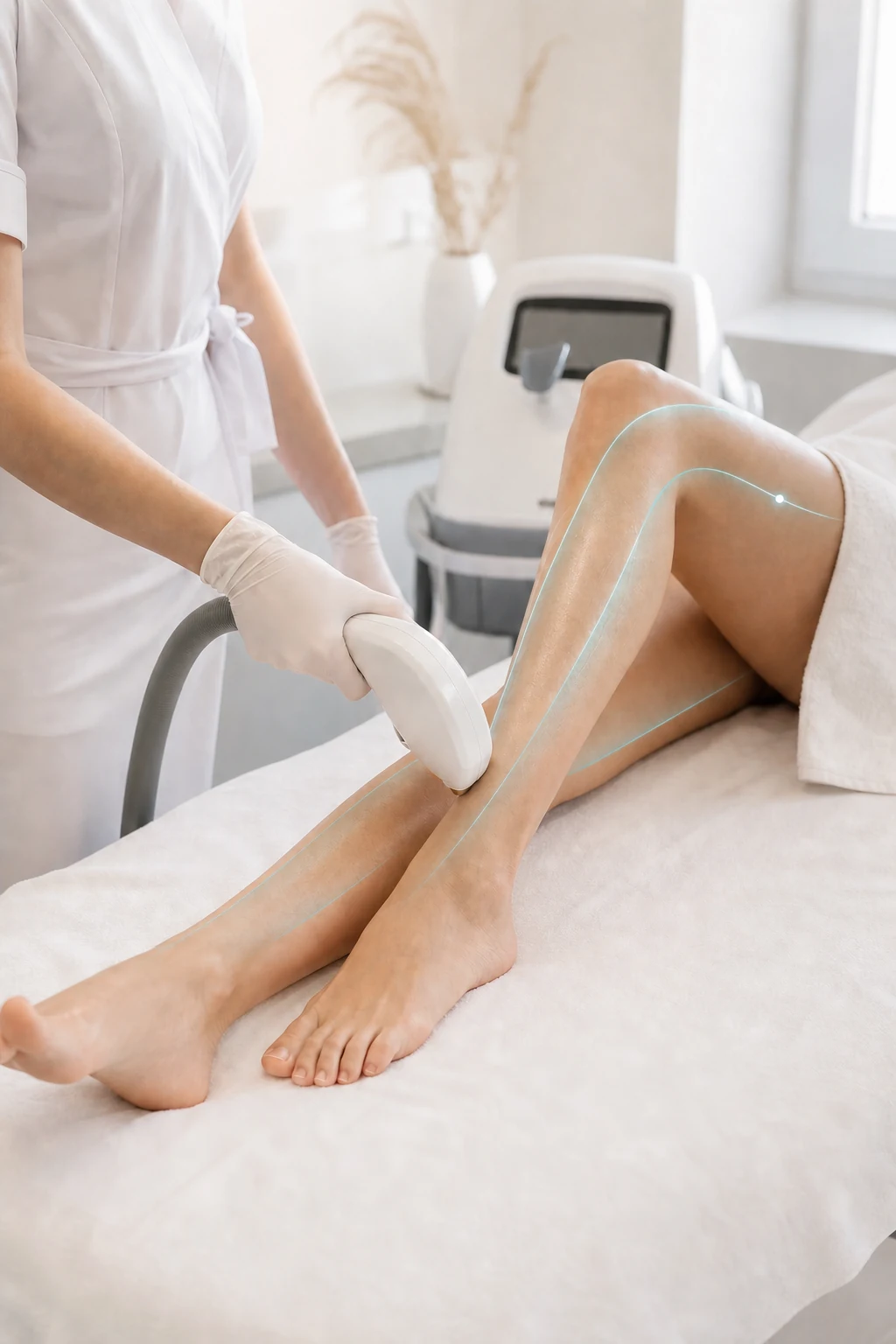
Laser hair removal on the upper arms — the upper part of the arm from the shoulder joint to the elbow. The diode laser targets the pigment in the hair, and the area is treated as a course.
The area covers the upper part of the arm, from the shoulder joint to the elbow; the forearm is not included and is a separate item in the price list. The split is not a formality: above the elbow the hair is usually darker and denser than on the forearm, so the power is set specifically for it. The diode laser delivers its pulse to the pigment in the hair, and built-in cooling works at the moment of each flash.
This area is chosen by people who care how they look in sleeveless tops: the upper arm is the first thing that shows below a short sleeve. Dark hair usually responds well; very fair hair responds less, because the laser needs pigment — the specialist tells you this at the assessment, not after the course. If you want the whole arm with no transition between sections, there is the full arms area.
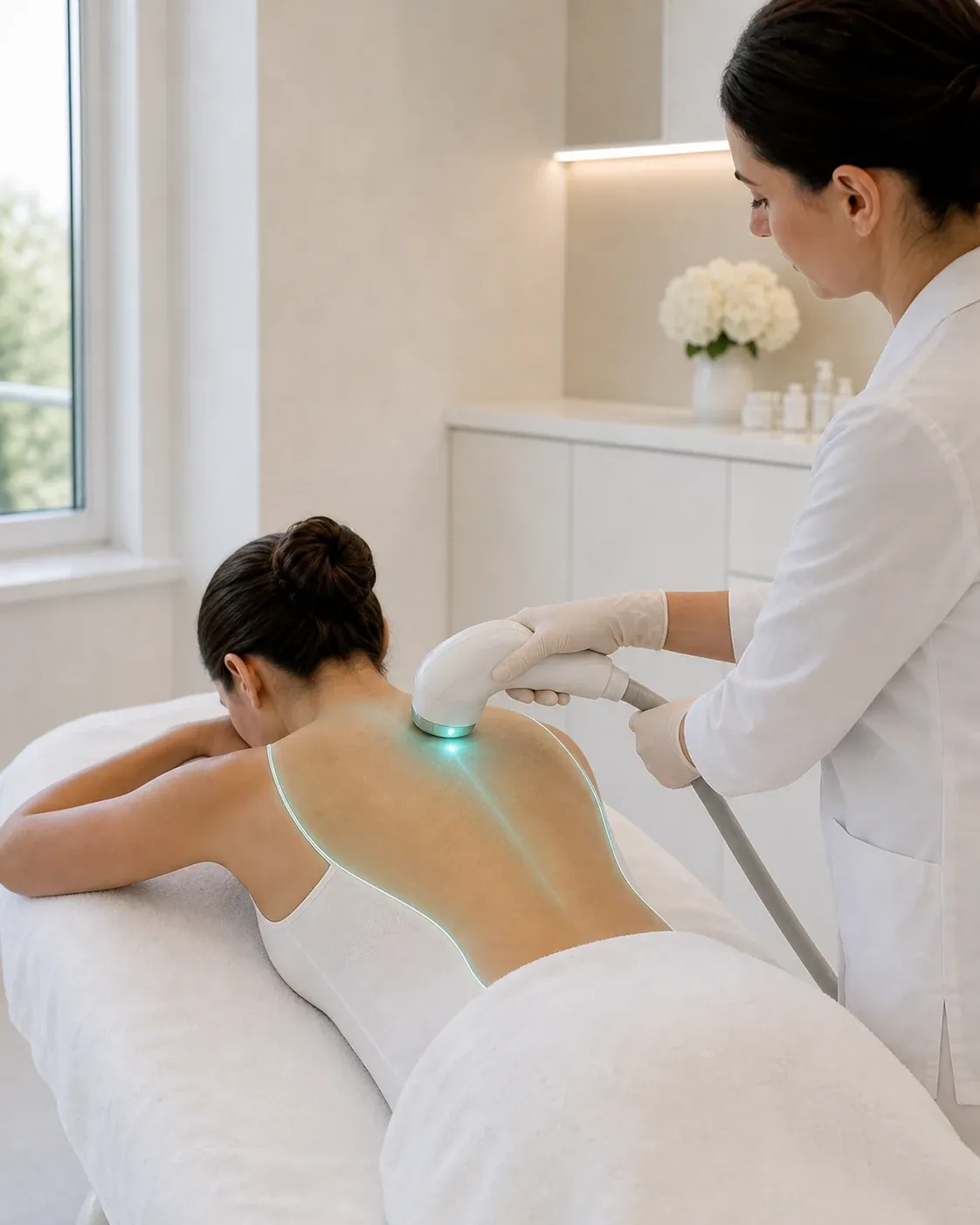
The surface is rounded, so the specialist moves the handpiece in an arc, turning your arm — on a flat pass part of the pulse would land at a glancing angle. The inner side is thinner and more sensitive than the outer side, so the settings are adjusted there; the skin is soft with almost no bone beneath it, and the treatment is felt more distinctly only near the elbow. Each visit reaches only hair in the active growth phase, and hairs grow out of sync, so the area is treated as a course with an interval of 4–8 weeks; the specialist will tell you after the assessment how many sessions you need, based on your skin phototype and hair thickness.
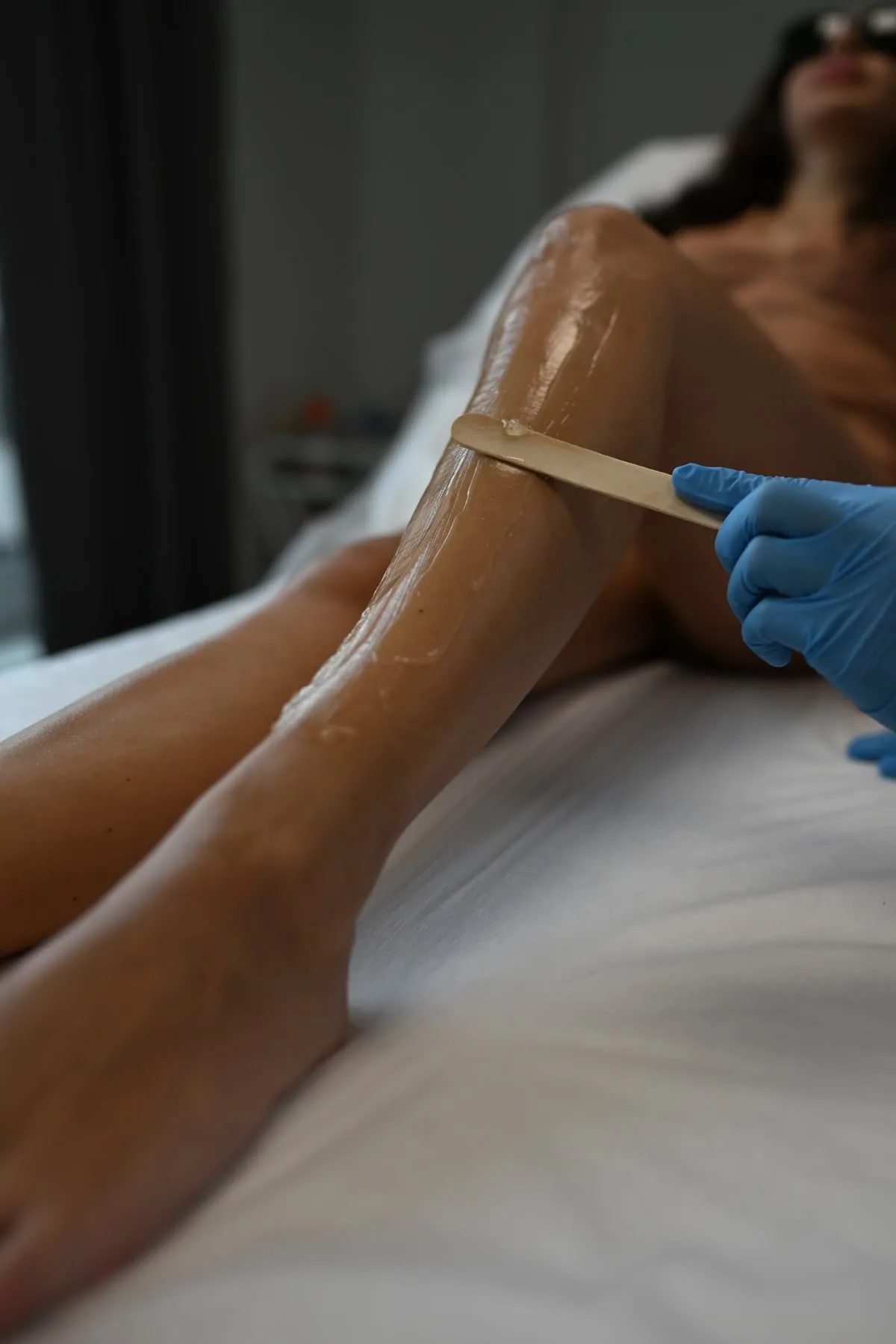
Preparation: shave the area with an ordinary razor the day before or on the day of your visit — the root must stay in the skin, so avoid waxing, sugaring and tweezers for 2–4 weeks before the session. For 24 hours afterwards, skip the sauna and hot baths. You also need 2–4 weeks without strong sun and sunbeds: arms are uncovered all summer and are among the first to tan, so plan a visit after a holiday in advance.
How the visit goes
Step by step: the treatment
- 01Skin preparationFor 2–4 weeks before: no tanning, sunbeds, waxing, sugaring or tweezers; the day before or on the day, shave the area with an ordinary razor.
- 02Phototype and settingsThe specialist determines your skin phototype and sets the device accordingly; a cooling gel is applied to the skin.
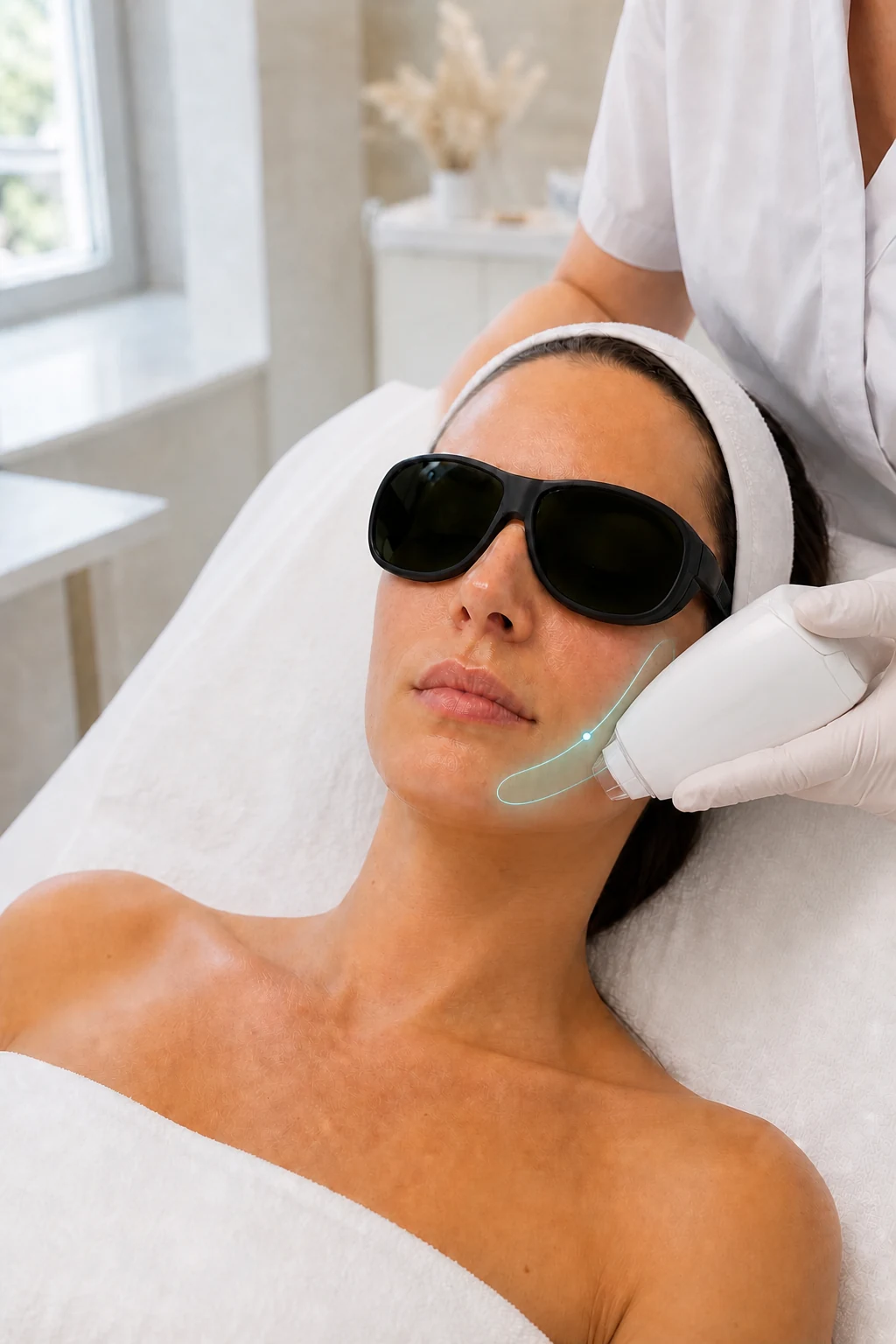
- 03SessionThe handpiece passes over the area in flashes; built-in cooling keeps it comfortable. For most people growth slows and some hairs shed after the first few sessions — how quickly depends on hair and skin type.
- 04AfterwardsTwo weeks without sun or sunbed; do not pull hairs from the root — shaving only. The next visit is scheduled at an interval the specialist chooses.
Before · during · after
Preparation and aftercare
During the treatment
- 01A light tingling and warmth — built-in cooling keeps the pulses comfortable.
- 02The area is treated quickly: from a few minutes to half an hour.
- 03The specialist sets the parameters for your phototype on the spot.
After the treatment
- 01First hours: slight redness is possible — it passes on its own.
- 021–2 days: the skin may be slightly more sensitive than usual.
- 037–14 days: the treated hairs gradually fall out.
This is how it goes for most people — the specialist will go over your details before the session.
Caring for you
What to know before your visit
- If you are pregnant or breastfeeding
- If you have true photodermatitislaser treatment is not performed, please check with your doctor
- If there is herpes, psoriasis or keloid scarring in the treatment area
- If there are hairy birthmarks in the treatment area
- If you have many moles on your body
- If you have a blood clotting disorder (including leukaemia)
- If you have diabetes of any type
- If you have cancer
- If you take hormonal or certain painkilling medicationa consultation with your doctor is needed
- If you have epilepsy
- If your skin is highly sensitive to light
- With certain viral illnessesit is better to wait until you recover and check with your doctor
Before starting, the specialist examines the area and checks contraindications in any case — this is part of the visit, no separate booking needed.
Better value together
Often booked together
These can be done in the same visit in Vilnius.
You can add “Forearms” — €30Usually booked with “Upper arms” — €60 for bothBook together
Laser hair removal in Vilnius
Popular services
FAQ
Frequently asked questions
The course, the sensations, the preparation — what people ask before their first session.
Still have questions?
Book a visit — the specialist will look at the area and put together a plan.
Available timeschecking the schedule…
The diode laser works with a cooled tip: the sensation is short warm snaps. Sensitive areas (bikini, upper lip) are noticeably easier to take than waxing. If the discomfort is strong, the specialist lowers the settings during the session itself.
We work through the summer. You must not come with a fresh tan: after strong sun or a sunbed a 2–4 week pause is needed, and between sessions — SPF on exposed areas. On tanned skin the settings are chosen more gently, so the examination is compulsory.
Shave the area 12–24 hours before the visit — the root must stay and the surface must be clean. For 2–4 weeks do not pluck, wax or sugar. On the day of the session — no creams, deodorants or self-tan on the area.
For 48 hours — no sauna, pool, hot bath or sport that makes you sweat. For a week — no scrubs or aggressive acids on the area. Sun — only under SPF. Hair will start to fall out in 5–14 days, and that is normal.
The laser sees light, grey and red hair less well — there is little pigment in it and the result will be weaker; we will say so plainly at the examination. There are also contraindications: pregnancy, taking photosensitising medication, inflammation and fresh damage on the area.
A bundle is better value if you take several areas in one visit: the price is fixed and lower than the areas added up. If you need a single area — take it separately, there is no point paying extra for a bundle.
service price€60€30
Book now ALVALINE centre network
How to find us
We are nearby. Pick a city to see the centre address, contacts and location.
Centres in the city
1 centreAntakalnio
Antakalnio g. 14
- Phone+370 645 75736
- Opening hoursDaily 09:00–20:00
Antakalnio g. 14